
Introduction
Multiple factors affect access to Disabled family utility cycling. Making a journey requires successful implementation of a sequence of steps. Many or all of these steps can be rendered more difficult or impossible by barriers that disproportionately affect Disabled families, but if these barriers can be surmounted, significant benefits may be realised. Indeed, it is likely that many Disabled families can gain greater benefits through access to utility cycling than could be gained by non-disabled families or individuals.
Disabled people, by definition, have at least one impairment which makes day-to-day life significantly more difficult than it is for most people (UK government, 2010a). The social model of disability emphasises that disability is caused by society’s unwillingness to meet the needs of people with impairments (Disability Rights UK, n.d.). It is undeniable that societal efforts to improve accessibility would hugely reduce many people’s experienced disability.
This auto-ethnographic paper discusses intersectional privileges (Disability Rights UK, 2025). Intersectionality describes how people with multiple marginalised characteristics are likely to experience greater discrimination than might be anticipated from each characteristic individually (Crenshaw, 2017). Privilege describes an aspect of a person’s life in which they experience relative unearned advantage rather than disadvantage, and again, the societal benefits of different privileges may interact and amplify each other. People who experience marginalisation via some of their characteristics may also experience privilege via other characteristics – they can be simultaneously intersectionally marginalised and intersectionally privileged.
Privileges inevitably affect Disabled families’ ability to use cycling for utility journeys. The structure of this paper means my own and my family’s highly intersectionally privileged status is relevant. Intersectional privileges have enabled us to cycle utility journeys for most of the last 18 years, despite facing barriers to active travel related to our family’s combined simultaneous intersectional marginalised characteristics:
My husband and I are cis-het presenting, degree-educated, employed, comfortably well-off, and have accents that code as “posh English” (even though I’m Welsh). We have four children. All of us are white UK nationals.
Two of our children are non-disabled, two are neurodivergent and Disabled. Two of our children are adopted and therefore care-experienced, and two are our birth children.
Since 2020, I have been Disabled with a variable pain and mobility impairment. I am usually visibly Disabled, but I am invisibly Disabled while cycling except when transporting my wheelchair. My condition may resolve or worsen – there is no predictable prognosis. I consider myself highly privileged within the Disabled community because of my wider privileges, and because the nature of my impairment does not affect my overall health or my ability to communicate, and is relatively socially accepted by non-disabled people. I currently use e-cycles for most journeys up to five or so miles each way. I am also able to drive, and have both a van and a Blue Badge.
Considering risk for Disabled families vs non-disabled individuals
The potential risks of using or attempting to use utility cycling for journey-making can be vastly different for Disabled families than for non-disabled individuals.
We instinctively understand that the consequences of the same event can vary wildly depending upon who it happens to: if a four-year-old trips and falls on a pavement, we are unlikely to be significantly concerned. If a ninety-four-year-old person trips and falls on a pavement, we are likely to be immediately concerned about serious injury. Many people use different terms to describe what has happened to each of these people, indicating societal assumptions about the different severities of the incident dictated by the characteristics of the victim: the four-year-old “fell over”, while the ninety-four-year-old “had a fall” (NHS, 2025).
Organisations such as London Cycling Campaign (London Cycling Campaign, 2025) (London Cycling Campaign, 2024), Healthy Streets Scorecard (Healthy Streets Scorecard, n.d.), and Wheels for Wellbeing (Wheels for Wellbeing, n.d.b) are working to highlight the different risk profiles that people with different intersectional and protected characteristics face in accessing active travel, yet anecdotally it appears that much public space and active travel policy and practice assumes the risks and barriers to accessing cycling are comparable for everyone, and can be mitigated with “confidence”.
A local organisation that claims expertise in inclusive cycling (Cycle Derby, n.d.) was promoting an “inclusive” family ride. The advertised route went through chicane barriers too tight for larger cycles, and up stairs. I offered – as an experienced family cyclist familiar with using the area on large cycles – to help provide more accessible alternative route options and information. I was rebutted with a counter-offer of “confidence training”, to “enable our family to cycle wherever we wanted”…
This “you just need confidence” attitude is pervasive in active travel provision: 10-15% of national active travel spending goes to the Bikeability scheme to train children to cycle, with additional funding for active travel promotion (Active Travel England, 2024a; Browne, 2025; Modeshift Stars, 2023). However, evidence suggests that Bikeability training is ineffective at increasing active travel rates (McKay, et al., 2020; Goodman, et al., 2015), and that promotion and training are generally ineffective unless safe, accessible routes exist (Roaf, et al., 2024). Promotion of “confidence” blames individuals for failure to cycle, effectively justifying national and institutional failure to address the real barriers (Department for Transport, 2024; Sustrans, 2022) that Disabled families and others face.
Many risks that Disabled families may face in using utility cycling are not directly related to cycling itself: utility family cycling while Disabled carries potential risks due to societal perceptions of Disabled people and of cycling. Professionals providing services to Disabled families are members of a society in which both Disabled people (ONS, 2021; ONS, 2022a; DFID, 2015; Heslop, 2013) and people who cycle are routinely “othered” (Aldred, 2012; Road Safety GB, 2022). Being perceived as “other” increases the risk of experiencing maltreatment, including from statutory services. Participation in utility cycling may worsen the odds of experiencing discrimination and consequences of such discrimination in multiple areas of a Disabled family’s life. It is worth bearing in mind that:
Disabled people are more likely to be victims of crime than non-disabled people (ONS, 2019; UK Gov Disability Unit, 2021), yet face additional barriers to accessing justice (EHRC, 2021; Pring, 2020; Disability Rights UK, n.d.): when something clearly harmful has happened, Disabled people are frequently told “you can ask for it to be put right”, “you can go to the police”, or “you can take a case for discrimination”. But frequently, Disabled people cannot do these things, or otherwise will have to allow for the serious potential risks and costs of doing them.
Disabled people are less able to access healthcare than non-disabled people, often due to discriminatory healthcare attitudes and practices (NHS England, 2025; Sakellariou & Rotarou, 2017; Read, et al., 2018; Pring, 2021). The consequences of an injury may be far more severe for any Disabled person than a comparable injury would be for a non-disabled person.
Disabled parents frequently face blame, assumptions of inadequate parenting and refusals of assistance from statutory services, simply because they are Disabled (Munro, et al., 2018). Contact with statutory services is likely to cost Disabled families time, energy, money and emotional capacity, and carries risk of harmful interventions, including unnecessary temporary or permanent removal of children. Disabled family cycling may carry the risk that a Disabled parent appears too capable to merit support, or appears dangerously irresponsible, or both, to professionals with power over the family;
Parent carers for Disabled children similarly face routine blame, assumptions of inadequate parenting and refusals of assistance from statutory services (Clements & Aiello, 2021). Again, statutory services have the power to seriously harm Disabled families. Negative consequences of injuries can be more serious in multiple ways for parent carers than comparable injuries would be for non-carers;
Disabled people may lose essential benefits if they cycle (Wheels for Wellbeing, 2022), as benefits entitlements are frequently incorrectly assessed (Pring, 2018).
Disabled people routinely face negative societal attitudes that affect their daily lives (Moss & Frounks, 2022).
Services including education, health and social care tend to be risk-averse regarding Disabled people’s participation in normal daily activities (Field, et al., 2024; Seale, et al., 2013; NeuroNav, n.d.). Prevalent attitudes aligned with the medical and charity models of disability (Vaughan, 2022) assume that Disabled people should not take risks: Disabled people participating in an activity perceived as “risky” (or their parents/carers) can be portrayed being irresponsible or irrational.
Families who cycle frequently face judgement that cycling with children is an inappropriate risk (Rahman, 2025). Women face generally harsher societal expectations (including internalised expectations) relating to parenting than men (Ishizuka, 2025; Schmidt, et al., 2022).
Our experience has been that Disabled family utility cycling can provide huge time, energy, financial, emotional, physical, family relationship and social benefits. We have been able to access these benefits as a result of our intersectional privileges. The range of risks that intersectionally oppressed families experience affect all areas of their lives. These risks must be mitigated by societal changes, and not only to open the possibility of utility cycling to more Disabled families.
Factors important to utility cycling as a Disabled family group
If a Disabled family decides to attempt and/or practise utility cycling then further factors arise, which initially exist as barriers but as expertise and familiarity develop, often become benefits.
Time, energy, physical, cognitive and emotional capacity—“Spoons”
Christine Misanderino’s Spoon Theory (Miserandino, n.d.) is a simple model to describe how Disabled and chronically ill people need to ration our capacity across a range of domains carefully each day. In Spoon Theory, a Disabled person has a set number of “spoons” each day, representing capacity for activity of any kind. Over-spending spoons can cause illness or increased severity of a condition, reducing capacity on future days. Any activity—moving, waiting, supervising, talking, form-filling—may cost spoons for a Disabled person.
Disabled parents and carers have the added responsibility that over-spending their own spoons can result in them becoming less able or unable to care for their dependents – while unpredictable responses of children may result in activities costing more spoons for a parent/carer than was anticipated. Disabled parents and carers are therefore likely to be extremely cautious about taking risks, such as trying out activities like cycling, which may, initially or permanently, use too many spoons.
Conversely, options such as utility cycling have the potential to reduce daily spoon demand on Disabled parents and carers, both directly by making specific journeys easier, and indirectly, by enabling early independent mobility for children in Disabled households.
My experience as a Disabled parent with Disabled children is that I need vastly longer to complete physical tasks than when I was non-disabled. I can no longer complete many tasks reliably or at all. Simultaneously, my Disabled children have high support needs. The spoons required to carry out essential caring activities, child-related activities expected by professionals and my own necessary activities against the spoons I have frequently is a sum that does not add up. Recommendations to “just get up earlier” or “work out how you can bring the children along” are instructions to find more capacity when, as a Disabled parent and/or parent carer you are frequently exhausted already.
My favourite cautionary tale for professionals on uninformed assumptions: a senior member of social care staff was delivering training to parents of Disabled children with complex emotional and behavioural needs. She declared that it was always possible to find “me time”, and recommended we should do this whenever we went to the toilet, as we’d be alone and able to relax. She had failed to ask how we actually handled toilet breaks. As carers of high-needs children, we generally had to take one or more children with us and often physically hold and reassure them continuously, so that we could use the toilet at all!
It will often be a significant sacrifice and risk for members of a Disabled family to find capacity to participate in a new activity which may not have long-term benefits. Encouraging cycling without understanding barriers and offering mitigations becomes a barrier itself, by requiring Disabled people to educate others and argue against disbelief.
The up-front costs required in time, energy and capacity to access cycling as a Disabled family will be insurmountable for many families without considerable changes to infrastructure, care and service provision. If the barriers to accessing utility cycling can be surmounted, considerable capacity benefits can be realised.
There are two main ways cycling has benefited us in spoon savings:
1. Our non-disabled children became able to make many journeys independently by age 10–11. Reduced “parent taxi” duties freed up many spoons for me, which were spent on caring and pacing to improve my overall functioning. This benefited everyone: for example, our non-disabled children simply would not have been able to attend many of the groups they did, had they not been able to travel independently, and have enjoyed the freedom of being able to go where they want, when they want.
2. Cycling using an e-tandem enables completion of routine trips using far fewer spoons than other options for the same journeys: relying on council “SEND” transport and myself driving, parking, then walking using crutches or attempting to get through school-run driver chaos using a wheelchair was far more time consuming, painful and draining than gliding to school entrances on an e-bike is.
The additional capacity and consistent extra hours gained from cycling utility journeys benefited our family’s internal situation and enabled me to return to paid work.
These capacity benefits have only been achievable because of our family’s privilege. Even so, we drove most journeys for a number of years while we were not able to find the capacity to enable every member of our family to cycle for utility journeys. Present low Disabled family utility cycling rates indicate that few are able to surmount the barriers to access.
Mitigating barriers to utility cycling for Disabled families has the potential to hugely benefit all members of Disabled families.
Money
Disabled family utility cycling can have significant up-front and ongoing costs. The price of non-standard cycles can be many times that of standard bicycles (Wheels for Wellbeing, 2025d), but for many, they are essential for utility cycling. Children grow and change: a range of different cycles must be sourced within a few years. A young Disabled child may or may not be able to be transported using the same devices that many non-disabled children use. An older Disabled child may be able to use bicycles, or may need non-standard cycles, and potentially other walking/wheeling aids too. Combining the changing needs of a Disabled adult and children can be expensive. Storage facilities, servicing and repairs are also likely to cost more for Disabled families than for non-disabled families because the cycle types used are typically larger and less familiar to local cycle stores than standard bikes.
Conversely, the cost savings and financial gains that utility cycling can enable can be very considerable: utility cycling has not only reduced driven miles and public transport mileage for our family, realising financial savings, it has also freed up enough time and cognitive capacity for me that I was able to re-start paid work after eight years as an unpaid carer.
Accessible infrastructure
Street-based cycling spaces, such as low-traffic carriageways and cycle tracks parallel to carriageways, rarely meet national good practice standards (Department for Transport, 2020), but if they do, quiet streets can be reasonably usable for a Disabled family where one or more adults travel with children once necessary skills are learned. Skills include control of cycles appropriate to cycle types and learned systems for managing specific routes, unexpected incidents, and specific infrastructure types such as crossings and junctions, as well as dealing with small numbers of other road users including drivers. To learn these skills and rules, practice is needed in very quiet traffic-free spaces.
Traffic-free routes in green spaces can be good for practicing the early stages of cycling. However, as well as often being socially unsafe (ONS, 2022a; London Cycling Campaign, 2024), they are often physically inaccessible. They are also frequently impossible to reach for cyclists who cannot ride on roads, due to missing safe active travel route sections: At present, national design guidance (Active Travel England, 2024b) contains “critical fail” ratings for on-road active travel routes with excessive danger from drivers. However, there are no clear “critical fail” measures for accessibility of traffic-free routes. This means that since designated main active travel routes forming parts of the national network are inaccessible (Larrington-Spencer, 2025), Disabled families cycling can be forced onto “critical fail” hazard routes. A comparable situation for motor transport would be for trunk roads to be funded that could only be accessed using 4x4s.
Typically, even relatively accessible traffic-free routes have vehicle restriction measures such as bollards at entrances (Wheels for Wellbeing, 2024a), meaning informal breakdown or other emergency rescue options are limited for people who cannot walk to the nearest road access. This means even in optimal conditions, routes isolated from the road network have significant safety and accessibility disadvantages compared with on-road or road-adjacent cycle facilities.
A Disabled friend who uses an e-trike for utility journeys phoned me. Her trike had broken down while she was out. She was searching with increasing desperation for anyone who was able to rescue her during working hours. Despite having broken down on a road-adjacent cycle track just before she planned to enter the long riverside city centre National Cycle Network traffic-free route, no wheelchair-accessible taxi or breakdown service was prepared to pick her up. No local support services were answering the phone. Fortunately, I had non-disabled teens at home, a van, and time, so we could rescue her. In discussions about what would have happened had she broken down a few hundred metres further on, past vehicle restriction barriers on the “safe” traffic-free route, she and I concluded that as she cannot walk more than a couple of metres, the only safe option would have been to call emergency services. This would likely be deemed a “non-emergency” situation, so had the weather been cold or wet, she could have been at risk of serious health consequences prior to help arriving.
Accurate information is also critical for safety and accessibility, especially where infrastructure accessibility is poor or has specific hazards associated with it (Wheels for Wellbeing, 2025a). Access information is regularly inaccurate (National Centre for Accessible Travel, 2025). This can lead to Disabled people being put at risk or being unable to complete journeys. For example, we regularly come across venue information that declares Disabled visitors are welcome, that the venue is “fully accessible”, and that cycle parking is provided. This rarely means there is accessible cycle parking (Figure 1). Mostly, where cycle parking is absent or unusable, we can find an alternative such as railings, posts, or cycle stands associated with a different venue. When non-disabled family members are present, they can carry out physically challenging locking processes. Occasionally, we have to go home.
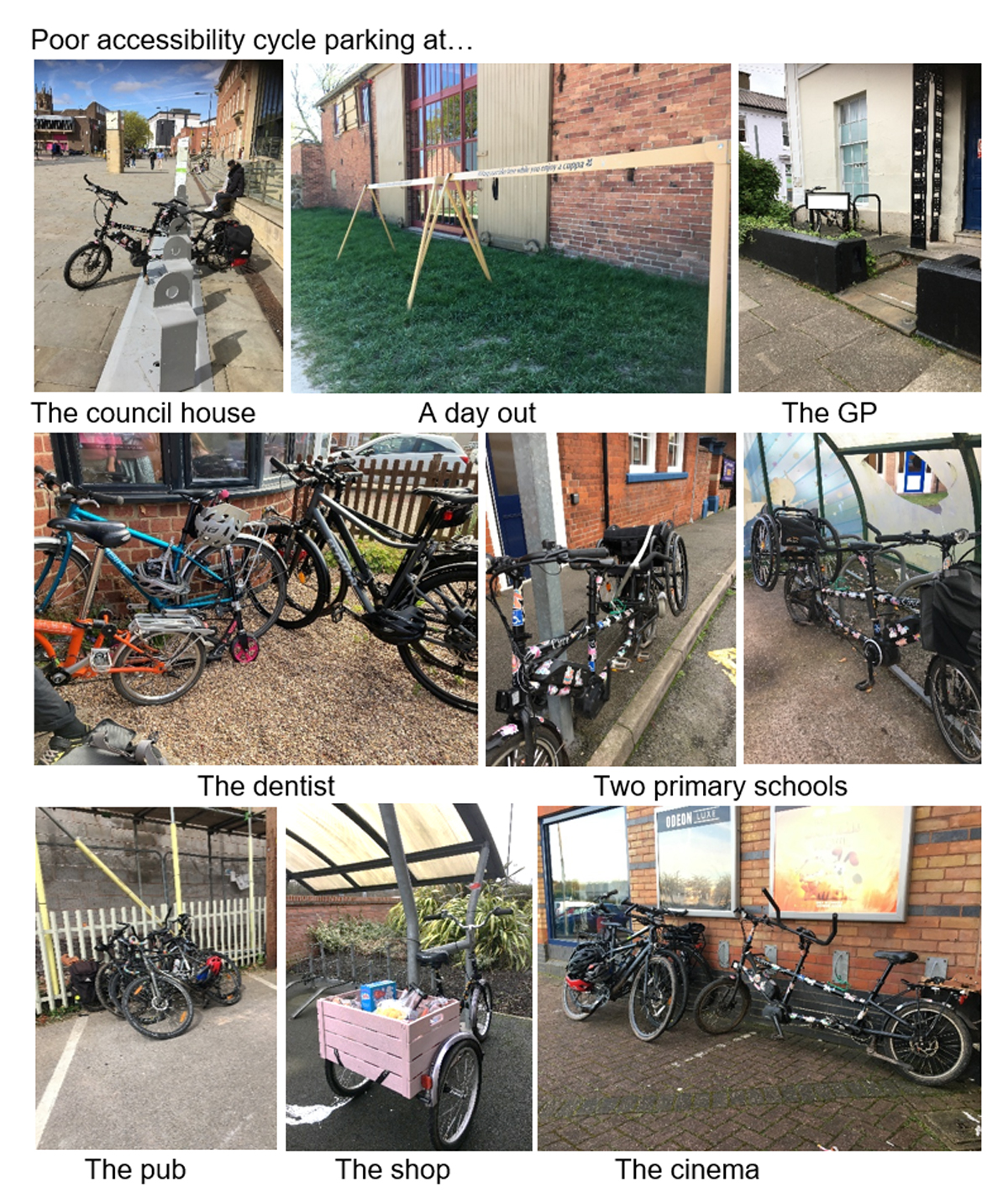
Figure 1: Examples of poor accessibility cycle parking.
Social privilege
Social privilege has been defined as “any entitlement, sanction, power, immunity and advantage or right granted or conferred by the dominant group to a person or group solely by birthright membership in prescribed identities” (Black & Stone, 2005). Black and Stone go on to include “differing degrees of ableness” as a category of social privilege, demonstrating that “birthright” is not in fact a necessary condition. Rather, individuals can move from more privileged to less privileged states and vice versa in a range of domains including disability, educational and socioeconomic status, “looked after” or corporate care experience status, citizenship status and more.
Disabled families will almost always experience intersectional low social privilege: a Disabled family will include at least one person whose Disabled status reduces their privilege, and will frequently include young people, women, and people with low educational and socioeconomic privilege (Department for Transport, 2021; Heslop, 2013; ONS, 2022a). Being a member of a Disabled family increases the risk of experiencing negative consequences associated with engaging in non-normative activities such as cycling, including in apparently unrelated areas of life. This means a Disabled family utility cycling without otherwise challenging social norms faces risks that non-disabled individuals or families are less likely to face.
The intersection of social privilege with inaccessible infrastructure, the need to use non-standard cycles and other mobility aids and aspects of family members’ physical, cognitive and emotional capacities means that to use utility cycling, Disabled families are likely to need to challenge social norms and professional assumptions by asking for reasonable adjustments (UK gov, 2010b) from essential service providers. Requests for reasonable adjustments are regularly ignored or refused (Pring, 2022). When reasonable adjustments are not made, Disabled families have to decide whether to escalate a request to a complaint or a legal case (Paulley, 2015). Escalating may risk reducing quality of essential service provision or withdrawal of services. The alternative is to accept poor access, even if that excludes the family from cycling or from aspects of the service.
None of the special school sites our children have attended have entrances that are accessible for me as a physically Disabled person. The mainstream schools our children have attended have had accessible entrances. Heavy, non-automatic gates and doors and missing dropped kerbs render the special school sites impossible for me to access without assistance, whether cycling or walking/wheeling. These barriers could be mitigated with the provision of a ramp, protected from drivers by stick-down wands, and either automatic openers on the pedestrian gates (and the reception doors for one school) or a modification to the vehicle gate controls to enable opening to be triggered by an intercom request from inside the gate as well as outside by staff in the school reception. None of these alterations have been made. Pushing further for adjustments would negatively affect my relationships with staff. Our children in these schools have complex behavioural difficulties: maintaining good relationships with staff is critical. I therefore cannot gain reasonable adjustments for access, even though lack of consistent access into schools also worsens my ability to parent.
Relevant personal expertise
Expertise required for Disabled families to make utility journeys cycling includes being able to anticipate and cater for the needs of each individual in the family, to consistently provide usable cycles for each family member, and to plan and implement journeys such that they are safe and pleasant enough for the trip to be repeated.
The level of cycling and planning expertise required to make utility trips cycling (Wheels for Wellbeing, 2024b) is self-evidently higher than that required to make leisure trips:
Utility trips are made for a purpose other than the journey itself—for example, to school, work, healthcare appointments or shopping, and to social or leisure events. The purpose of the trip fixes the start and end points. The route taken for the trip is therefore largely dictated by the start and end points. The date and time the trip is made, duration available to make the trip and frequency with which making the trip will be required are all dictated by the trip’s purpose.
Leisure trips are made for the journey itself – for example, going cycling for exercise or for enjoyment. These trips have few limits on route, timings and frequency. Even the start point of leisure trips may not be fixed: people often drive to a place they want to cycle.
Due to low levels of utility cycling in the UK, more people are familiar with leisure cycling than utility cycling. It seems common for decision-makers to assume that utility cycling route requirements are the same as for leisure cycling routes. This is not correct: utility cycling route requirements are much more comparable to driving, which is viewed as “utility-by-default” in planning. This seems likely to a factor in poor utility cycling and amplified mobility route development (Wheels for Wellbeing, 2025b).
To demonstrate the detail required in Disabled family utility cycle planning, we will consider a single journey example of a school run—implied by nationally-funded campaigns to be a trip that can be made by walking/wheeling or cycling following a little encouragement, despite evidence that inadequate infrastructure prevents many from using active travel (Boland, et al., 2025; Bikeability, 2025; Sustrans, 2025). We would never choose the routes, times and journey frequencies required to complete this routine utility trip for a leisure trip.
Considering the routes above (Figure 2) in detail:
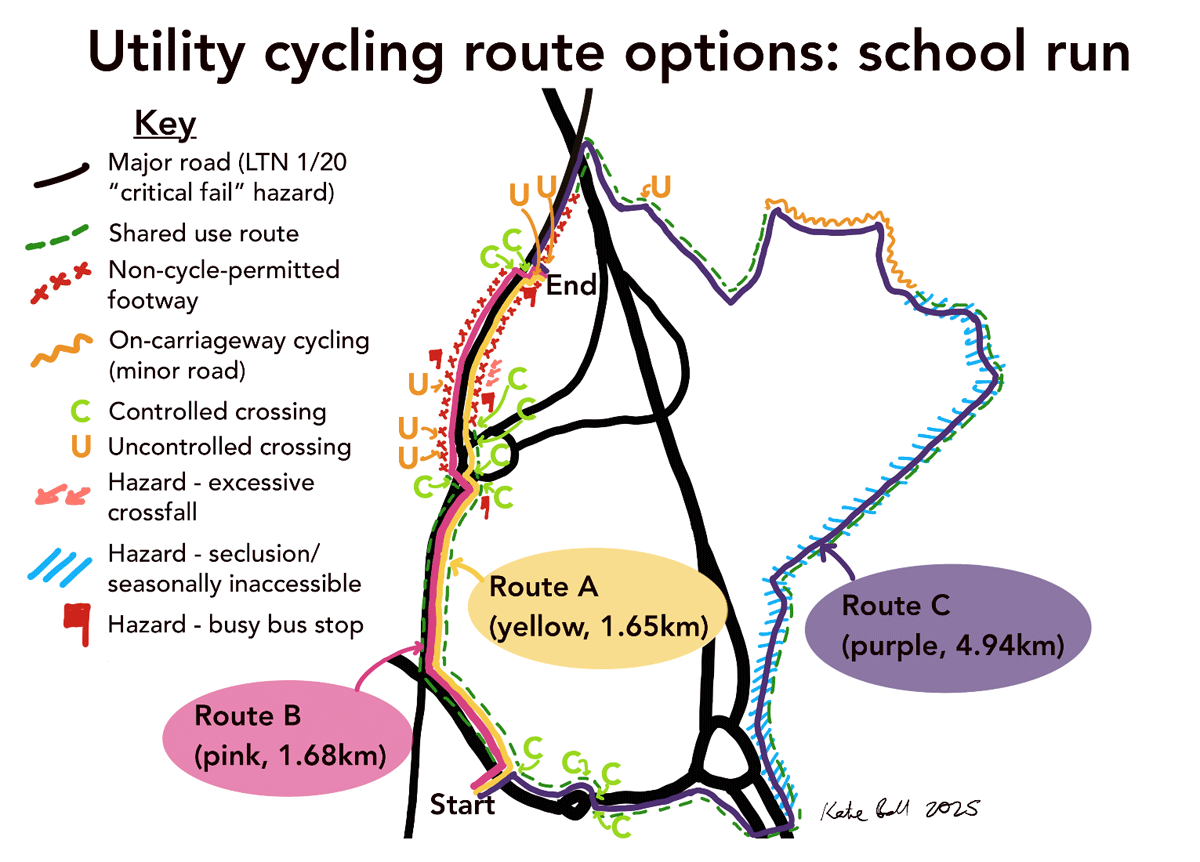
Figure 2: Utility cycling route options: school run.
Route A is the most direct, at 1.65km. It includes five controlled Toucan crossings, two uncontrolled crossings, four bus stops, three of which are busy, and a section with crossfall (Wheels for Wellbeing, 2025c) so steep it is not safe for upright trikes (or my wheelchair). The uncontrolled crossings and bus stops are too confusing and hazardous for our learning-disabled teen to negotiate without support. Each controlled crossing adds delay and deprioritisation. This route is mainly next to 40mph roads: it is loud, with perceptibly polluted air, causing unpredictable levels of distress to our neurodivergent children. Our non-disabled teens often use this as part of their routes.
Route B is 1.68km, comparable in distance to route A. It is used when our learning-disabled teen is riding their trike, to avoid the crossfall barrier on route A. It also includes five controlled crossings, three of which are cycle-permitted Toucan crossings and two of which are non-cycle-permitted crossings. The non-cycle-permitted crossings include a narrow central refuge which is fully obstructed by a tricycle and/or tandem, preventing other people from using the crossing with us. The route includes five uncontrolled crossings, none of which can be crossed by our neurodivergent children without support. Again, the route is largely next to 40mph roads.
Route C is 4.94km, three times as long as A or B. It includes five controlled crossings and one uncontrolled crossing, plus on-road stretches that our Disabled children need high levels of support to use. Most of the traffic-free route is National Cycle Network (Sustrans, n.d.) greenway. This is not accessible to Disabled or teenage family members from around November to March, nor after dark due to physical inaccessibility from poor seasonal maintenance and poor social safety with assault risk (ONS, 2022b; London Cycling Campaign, 2024). The route is mostly quieter than routes A or B. Distance and gradients make it too tiring for a regular school run, even in summer.
It is not lawful to cycle all of any of these routes: there are no lawful, safe routes available to reach the destination. To avoid cycling on 40mph carriageways carrying between 11,000 and 42,000 motor vehicles per day (Department for Transport, 2025a; Department for Transport, 2025b), a “critical fail” for safety (Active Travel England, 2024a; Department for Transport, 2020, p. p174), the only option is to use non-cycle-permitted footways. Two of us cannot dismount and walk, so we ride considerately on footways, relying on the Boateng guidance, which recommends police use discretion towards cyclists riding carefully on footways (MacMichael, 2014). That we feel able to cycle on footways reflects our generally high intersectional privilege.
This journey complexity and planning is completely typical. For unfamiliar journeys, I use Google Maps and Streetview, considering the certain and likely needs of each person making the journey at the time the journey will need to be made.
The access needs of families change as the children’s and adults’ mobility needs, preferences and journey destinations change, and as travel networks are altered. Journey planning is ongoing, dynamic, and requires considerable capacity and expertise. Expertise includes understanding highway rules; being able to cycle as a solo adult; simultaneously being able to support children to cycle (with or without constant adult presence); understanding infrastructural needs of different cycle types; predicting route accessibility in different conditions; and predicting how each group member’s health, tiredness, and other likely stressors may combine with all other conditions to affect cycling.
The barrier of expertise required for Disabled families to use utility cycling could be hugely reduced if active travel networks existed to provide safe and direct accessible route options for utility journeys, and if a wide range of non-standard cycles as well as servicing, repair and breakdown rescue options (ETA, n.d.) were reliably and readily available. These are all aspects of travel provision that we expect to be available to motor vehicle drivers.
Availability of appropriate skilled support
UK cycle training programmes, such as Bikeability, tend to assume that cycling is a simple process, to be learned within a few hours (Bikeability, n.d.). While this may often be true for physically learning to cycle, people do not learn independent utility cycling this rapidly: the process requires learning to move safely amongst other people walking/wheeling, cycling and driving motor vehicles. It is therefore comparable in complexity to learning to drive (UK Gov, 2022). Independent utility cycling can take years to learn, and may not be achievable, depending upon the infrastructure and cycles available, the teachers, and the age and capacity of the person learning. I believe these factors are why whole-class universal cycle training programmes do not increase cycling rates (McKay, et al., 2020; Goodman, et al., 2015).
Similarly to many other parents who cycle with children, we had experience of utility cycling prior to having children (Rahman, 2025). We also had experience of utility cycling as non-disabled adults and with non-disabled children prior to beginning utility cycling with Disabled children and after I became Disabled.
For a number of years before I became Disabled, we were able to cycle for leisure but unable to cycle as a whole family or with just one adult but all children for utility journeys. Complexities included having two increasingly large children with sensory, emotional and behavioural difficulties who would often attack anyone in reach on journeys even when apparently otherwise happy, rendering our existing child trailer and rear bike seat unusable, and meaning at least two non-disabled adults were needed for cycling outings. Using public transport was also impossible, and car journeys even with a large 7-seat MPV were difficult, particularly with only one adult present. It is possible an e-cargo trike with a rear larger seat for one child and front seats for three could have worked to enable one-adult family utility cycling journeys, but it wasn’t something we found the time or capacity to investigate. With two non-disabled adults in the household, we were still able to make some utility journeys cycling and train our two older non-disabled children to ride many of their utility trips independently.
Our younger children are now 12 and 14. Both need close adult support when cycling. Unlike young children with comparable support needs, they are too big to transport unless they co-operate. Our 14-year-old can ride as stoker on a tandem or on a solo trike with close support, while our 12-year-old can cycle alongside an adult on quiet roads. Each needed considerable 1:1 time and physical support from a skilled, physically strong adult to learn to cycle safely for utility. From 2020, I could not provide this support. However, the Covid lockdowns enabled my husband to take our 12-year-old, then aged 8–9, on regular rides to learn essential skills to stay safe with either parent on quiet roads. With his sister already able to ride her tandem, when school closures fully lifted, all members of our family were able to re-start cycling utility journeys (“The School Run”, 2022).
Disabled families need support to reach the point where barriers to cycling at least one utility journey route have become surmountable. Sources of support for Disabled families without sufficient prior cycling experience to begin utility cycling need to include funded, individualised expert training and cycle provision programmes (Wheels for Wellbeing, n.d.a). Organisations such as Joyriders demonstrate ways that families can be supported to begin cycling (Joyriders, n.d.).
Many Disabled families will need carers in addition to cycle trainers, both during sessions and to care for Disabled children or adults so other family members can learn necessary skills. However, there is a severe nationwide shortage of carers and childcare places for Disabled children, such that most parent carers are unable to find enough childcare even to participate in government-encouraged paid employment (Disabled Children’s Partnership, 2024; Coram, 2024; Department for Work and Pensions, n.d.).
Conclusion
Utility cycling can offer a range of benefits to Disabled families including financial, health, and logistical. However, utility cycling only becomes possible for Disabled families when all barriers to its use are mitigated to the point they can be surmounted.
Barriers can increase or decrease for individuals and families at any time, and do not all relate directly to cycling. While accessible infrastructure, access to suitable cycles and opportunity to learn necessary skills are all important, societal barriers relating to the exclusion and oppression of Disabled individuals and families across all areas of life are likely to be as important or more important as barriers to cycling for many Disabled families.
Organisations trying to promote or support active travel must be alert to the wide range of barriers that Disabled families face in accessing cycling. Organisations must avoid pressuring or criticising families for not cycling even if the organisation believes they have lessened or removed one or more barriers.
Acknowledgements
With thanks to my family members, who encouraged me to write this paper and permitted me to include their experiences.
Competing Interests
The author has no competing interests to declare.
References
Active Travel England (2024a) Active Travel England: annual report and accounts 2023/24. Available at: https://assets.publishing.service.gov.uk/media/66ab445a49b9c0597fdb091b/ate-annual-report-23-24.pdf (Accessed 06 2025).
Active Travel England (2024b) Active Travel England scheme review tools. Available at: https://www.gov.uk/government/publications/active-travel-england-scheme-review-tools (Accessed 06 2025).
Aldred, R. (2012) ‘Incompetent or Too Competent? Negotiating Everyday Cycling Identities in a Motor Dominated Society’, Mobilities, 8(2), pp. 252-271. Available at: http://doi.org/10.1080/17450101.2012.696342
Bikeability (2025) Cycle to School Week ‘25: Getting to School Just Got Awesome! Available at: https://www.bikeability.org.uk/cycletoschoolweek/ (Accessed 06 2025).
Bikeability (n.d.) Bikeability Cycle Training Delivery Guide 8-3-1 delivery – ratios and session timings. Available at: https://www.bikeability.org.uk/cycle-training-delivery-guide/8-the-bikeability-programme/8-3-delivery-of-bikeability/8-3-1-ratios-and-session-timings/ [Accessed 06 2025].
Black, L.L. and Stone, D. (2005) ‘Expanding the Definition of Privilege: The Concept of Social Privilege’, Journal of Multicultural Counseling and Development, 33(4), pp. 243-255. Available at: http://doi.org/10.1002/j.2161-1912.2005.tb00020.x
Boland, P., Nowland, R., Tellis, K.D., Adams, M., Westwood, J., Crook, D., Larkins, C. and Ridley, J. (2025) ‘Barriers and Facilitators to Cycling to School for Children in the UK: A Systematic Review’, Active Travel Studies, 5(1). Available at: http://doi.org/10.16997/ats.1553
Browne, D. (2025) 300m Active Travel Funding Allocated, LocalGov. Available at: https://www.localgov.co.uk/300m-active-travel-funding-allocated/61945 (Accessed 22 February 2026).
Clements, L. and Aiello, A.L. (2021) Institutionalising parent carer blame: The experiences of families with disabled children in their interactions with English local authority children’s services departments, University of Leeds School of Law / Cerebra. Available at: https://cerebra.org.uk/wp-content/uploads/2021/07/Final-Parent-Blame-Report-20-July-21-03.pdf (Accessed 22 February 2026).
Coram (2024) Childcare Survey 2024. Available at: https://www.coram.org.uk/resource/childcare-survey-2024/ (Accessed 22 February 2026).
Crenshaw, K. (2017). Kimberlé Crenshaw on Intersectionality, more than two decades later. Available at: https://www.law.columbia.edu/news/archive/kimberle-crenshaw-intersectionality-more-two-decades-later (Accessed 22 February 2026).
Cycle Derby (n.d.) Cycle Derby. Available at: https://www.cyclederby.co.uk/ (Accessed 06 2025).
Department for International Development (2015) Social Exclusion. Available at: https://gsdrc.org/wp-content/uploads/2015/08/SocialExclusion.pdf (Accessed 22 February 2026).
Department for Transport (2020) Cycle Infrastructure Design (LTN 1/20). Available at: https://www.gov.uk/government/publications/cycle-infrastructure-design-ltn-120 (Accessed 06 2025).
Department for Transport (2021) Transport: Disability and Accessibility Statistics, England 2020. Available at: https://assets.publishing.service.gov.uk/government/uploads/system/uploads/attachment_data/file/1019477/transport-disability-and-accessibility-statistics-england-2020.pdf (Accessed 06 2025).
Department for Transport (2024) National Travel Attitudes Study (NTAS) Wave 9: Cycling. Available at: https://www.gov.uk/government/statistics/national-travel-attitudes-study-wave-9/national-travel-attitudes-study-ntas-wave-9-cycling (Accessed 22 February 2026).
Department for Transport (2025a) count location 89268. Available at: https://roadtraffic.dft.gov.uk/manualcountpoints/89268 (Accessed 06 2025).
Department for Transport (2025b). count location 990053. Available at: https://roadtraffic.dft.gov.uk/manualcountpoints/990053 (Accessed 22 February 2026)
Department for Work and Pensions (n.d.) Universal Credit and your family section 7 in return for your universal credit. Available at: https://www.gov.uk/government/publications/universal-credit-and-your-family-quick-guide/universal-credit-further-information-for-families (Accessed 06 2025).
Disability Rights UK (2025) Rights and Justice. Available at: https://www.disabilityrightsuk.org/rights-and-justice?srsltid=AfmBOorJW-9AhogReKKfp8Inb-NZ5fzX6aXy5ZJR6BX76EsP8YOCfTYN (Accessed 22 February 2026).
Disability Rights UK (n.d.) “Social Model of Disability: Language”. [Online] Available at: https://www.disabilityrightsuk.org/social-model-disability-language?srsltid=AfmBOopHb8jZSltoswOsxNLiKPlR8y44z0roLcYhXrYXUeP1u_r2_E7K (Accessed 06 2025).
Disabled Children’s Partnership (2024) What childcare? Childcare Survey of Parents of Disabled Children. Available at: https://disabledchildrenspartnership.org.uk/wp-content/uploads/2024/08/A4-CHILDCARE-REPORT-V3-002.pdf (Accessed 22 February 2026).
EHRC (2021) Does the criminal justice system treat disabled people fairly?. Available at: https://www.equalityhumanrights.com/does-criminal-justice-system-treat-disabled-people-fairly (Accessed 22 February 2026).
ETA (n.d.) Cycle Rescue Cover. Available at: https://www.eta.co.uk/bicycle-insurance/cycle-rescue (Accessed 06 2025).
Field, L., Nagy, L., Knaggs, T. and Collett, J. (2024) ‘Positive risk-taking within social care for adults with physical disabilities: A review of guidelines in practice in England’, British Journal of Occupational Therapy, 87(8), pp. 466-476. Available at: http://doi.org/10.1177/03080226241246511
Goodman, A., van Sluijs, E. and Ogilvie, D. (2015) ‘A28 Impact of ‘Bikeability’, a national cycle training scheme for children in England’, Journal of Transport & Health, 2(2), p. S19. Available at: http://doi.org/10.1016/j.jth.2015.04.516
Healthy Streets Scorecard (n.d.) Indicators Explained. Available at: https://www.healthystreetsscorecard.london/indicators_explained/ (Accessed 06 2025).
Heslop, P. (2013) ‘Disabled people and their relationship with poverty’, Economic and Social Research Council working paper, Volume methods series no. 23. Available at: https://www.poverty.ac.uk/sites/default/files/attachments/WP%20Methods%20No%2023%20-%20Disabled%20People%20%28Heslop%202013%29.pdf (Accessed 22 February 2026).
Ishizuka, P. (2025) ‘Parental self-evaluations by gender and social class: Shared parenting ideals, male breadwinner norms, and mothers’ higher evaluation standards’, Social Science Research, Volume 128. Available at: http://doi.org/10.1016/j.ssresearch.2025.103156
Joyriders (n.d.) Joyriders. Available at: https://www.joyriders.org.uk/ (Accessed 06 2025).
Larrington-Spencer, H. (2025) ‘Autoethnography of disability and active travel in Greater Manchester: Encountering (non)citizenship through access controls on traffic-free walking, wheeling and cycling paths’, Urban Studies. Available at: http://doi.org/10.1177/00420980241311728
London Cycling Campaign (2024) What Stops Women Cycling in London?. Available at:https://lcc.org.uk/wp-content/uploads/2024/01/P1252-LCC-Womens-Cycling-Campaign-Report_FINAL_2.pdf (Accessed: 22 February 2026).
London Cycling Campaign (2025) Women’s Freedom After Dark. Available at: https://lcc.org.uk/wp-content/uploads/2025/01/Womens-Freedom-After-Dark-Report-by-LCC-Womens-Network.pdf (Accessed 22 February 2026).
MacMichael, S. (2014) ‘Transport minister: Responsible cyclists CAN ride on the pavement’, Road.cc. Available at: https://road.cc/content/news/108119-transport-minister-responsible-cyclists-can-ride-pavement (Accessed: 22 February 2026).
McKay, A., Goodman, A., Sluijs, E., Millett, C. and Laverty, A. (2020) ‘Cycle training and factors associated with cycling among adolescents in England’, J Transp Health 16, 100815. Available at: http://doi.org/10.1016/j.jth.2019.100815
Miserandino, C. (n.d.) “The Spoon Theory”. [Online] Available at: https://lymphoma-action.org.uk/sites/default/files/media/documents/2020-05/Spoon%20theory%20by%20Christine%20Miserandino.pdf (Accessed: 22 February 2026).
Modeshift Stars (2023) Active Travel England announce 101 million investmnt to boost cycling and walking nationwide. Available at: https://modeshift.org.uk/news/active-travel-england-announce-101-million-investment-to-boost-cycling-and-walking-nationwide/ (Accessed: 06 2025).
Moss, C. and Frounks, A. (2022) Attitudes and disability: The experiences of disabled people in 2022, Scope. Available at: https://www.scope.org.uk/about-us/equality-diversity-and-inclusion/disability-and-mental-health-report (Accessed 22 February 2026).
Munro, E. R. et al. (2018) ‘Re-imagining social care’, Disablity Research on Independent Living & Learning. Available at: https://www.drilluk.org.uk/wp-content/uploads/2019/06/Research-Findings-Munro-et-al.-2018-Re-imagining-social-care-services-in-co-production.pdf (Accessed 22 February 2026).
National Centre for Accessible Travel (2025) Understanding and addressing the gap in transport accessibility data – the transport and accessibility dataset. Available at: https://www.ncat.uk/wp-content/uploads/2025/03/ncat-Understanding-and-addressing-the-gap-in-transport-accessibility-data-full-report-PDF-FINAL.pdf (Accessed 22 February 2026).
NeuroNav (n.d.) An Intro to Supporting Dignity of Risk & Failure in Adults with Disabilities. Available at: https://neuronav.org/self-determination-blog/dignity-of-risk-and-dignity-of-failure (Accessed 06 2025).
NHS (2025) Falls. Available at: https://www.nhs.uk/conditions/falls/ (Accessed 06 2025).
NHS England (2025) Patient Safety Healthcare Inequalities Reduction Framework. Available at: https://www.england.nhs.uk/long-read/patient-safety-healthcare-inequalities-reduction-framework/ (Accessed 06 2025).
ONS (2019) Disability and crime, UK: 2019. Available at: https://www.ons.gov.uk/peoplepopulationandcommunity/healthandsocialcare/disability/bulletins/disabilityandcrimeuk/2019 (Accessed 06 2025).
ONS (2021) Outcomes for disabled people in the UK: 2021. Available at: https://www.ons.gov.uk/peoplepopulationandcommunity/healthandsocialcare/disability/articles/outcomesfordisabledpeopleintheuk/2021 (Accessed 22 February 2026).
ONS (2022a) Disabled people’s experiences with activities, goods and services: UK February to March 2022. Available at: https://www.ons.gov.uk/peoplepopulationandcommunity/healthandsocialcare/disability/bulletins/disabledpeoplesexperienceswithactivitiesgoodsandservicesuk/februarytomarch2022 (Accessed 22 February 2026).
ONS (2022b) Perceptions of personal safety and experiences of harassment, Great Britain: 16 February to 13 March 2022. Available at: https://www.ons.gov.uk/peoplepopulationandcommunity/crimeandjustice/bulletins/perceptionsofpersonalsafetyandexperiencesofharassmentgreatbritain/16februaryto13march2022 (Accessed 06 2025).
Paulley, D. (2015) “DART – the Disability Attitude Re-adjustment Tool”. [Online] Available at: https://www.kingqueen.org.uk/dart/ [Accessed 06 2025].
Pring, J. (2018) ‘DWP figures provide fresh evidence to explain PIP claim rejections’, Disability News Service. Available at: https://www.disabilitynewsservice.com/dwp-figures-provide-fresh-evidence-to-explain-pip-claim-rejections/ (Accessed 22 February 2026).
Pring, J. (2020) ‘Disabled Campaigners One Step Closer to Justice Despite Court Setback’, Disability News Service. Available at: https://www.disabilitynewsservice.com/disabled-campaigners-one-step-closer-to-justice-despite-court-setback/ (Accessed 22 February 2026).
Pring, J. (2021) ‘Campaigner horrified as G4S puts “do not resuscitate” on her file before ambulance trip’, Disability News Service. Available at: https://www.disabilitynewsservice.com/campaigner-horrified-as-g4s-puts-do-not-resuscitate-on-her-file-before-ambulance-trip/ (Accessed 22 February 2026).
Pring, J. (2022) ‘Councils frequently fail to make reasonable adjustments, says ombudsman’, Disability News Service. Available at: https://www.disabilitynewsservice.com/councils-frequently-fail-to-make-reasonable-adjustments-says-ombudsman/ (Accessed 22 February 2026).
Rahman, D. (2025) Mad or Magnificent? Mothers Who Cycle With Their Children in the UK. Available at: https://westminsterresearch.westminster.ac.uk/download/29fa9788deda5f91dfcd1694aa00e135eeba7efbc2d88f1f9c6ae9d98f216e4d/2593483/Mad%20or%20Magnificent%20Mothers%20Who%20Cycle%20With%20Their%20Children%20.pdf (Accessed 06 2025).
Read, S., Heslop, P., Turner, S., Mason-Angelow, V., Tilbury, N., Miles, C., & Hatton, C. (2018) ‘Disabled people’s experiences of accessing reasonable adjustments in hospitals: a qualitative study’, BMC health services research, 18(1), 931. Available at: http://doi.org/10.1186/s12913-018-3757-7
Road Safety GB (2022) “Cars vs bikes” – Panorama documentary highlights age-old problem. Available at: https://roadsafetygb.org.uk/news/cars-vs-bikes-panorama-documentary-highlights-age-old-problem/ (Accessed 03 2026)
Roaf, E., Larrington-Spencer, H. and Lawlor, E. R. (2024) ‘Interventions to increase active travel: A systematic review’, Journal of Transport & Health, 38, p. 101860. Available at: http://doi.org/10.1016/j.jth.2024.101860
Sakellariou, D. and Rotarou, E. (2017). “Access to healthcare for men and women with disabilities in the UK: secondary analysis of cross-sectional data”. BMJ Open, 7, e016614. Available at: http://doi.org/10.1136/bmjopen-2017-016614
Saleh, H. (2022) The School Run. s.l.: Spoke Out.
Schmidt, E.-M., Decieux, F., Zartler, U. and Schnor, C. (2022) “What makes a good mother? Two decades of research reflecting social norms of motherhood”. Journal of Family Theory and Review, 15(1), 57–77. Available at: http://doi.org/10.1111/jftr.12488
Seale, J., Nind, M. and Simmons, B. (2013) ‘Transforming positive risk-taking practices: the possibilities of creativity and resilience in learning disability contexts’, Scandinavian Journal of Disability Research, 15(3), pp. 233-248. Available at: http://doi.org/10.1080/15017419.2012.703967
Sustrans (2022) Paths for Everyone 3 years on 2018-2021 progress update. Available at: https://www.walkwheelcycletrust.org.uk/media/9991/sustrans-p4e-three-years-on-eng-digital.pdf (Accessed 22 February 2026).
Sustrans (2025) Big Walk and Wheel 2025. Available at: https://bigwalkandwheel.org.uk/ (Accessed 06 2025).
Sustrans (n.d.) Sustrans National Cycle Network. Available at: https://www.sustrans.org.uk/national-cycle-network/ (Accessed 06 2025).
UK Gov Disability Unit (2021) UK Disability Survey research report. Available at: https://www.gov.uk/government/publications/uk-disability-survey-research-report-june-2021/uk-disability-survey-research-report-june-2021 (Accessed 22 February 2026).
UK Government (2010a). Equality Act (2010) section 6 Disability. Available at: https://www.legislation.gov.uk/ukpga/2010/15/section/6 (Accessed 06 2025).
UK Government (2010b) Equality Act (2010) section 20. Available at: https://www.legislation.gov.uk/ukpga/2010/15/section/20 (Accessed 06 2025).
UK Government (2022) Supervise a Learner Driver. Available at: https://www.gov.uk/guidance/supervise-a-learner-driver (Accessed 06 2025).
Vaughan, M. (2022) Models of Disability. Available at: https://dubbot.com/dubblog/2022/disability-models.html (Accessed 22 February 2026).
Wheels for Wellbeing (2022) “Disability and Cycling Report of 2021 national survey results”. [Online] Available at: https://wheelsforwellbeing.org.uk/wp-content/uploads/2022/05/Disability-and-Cycling-Report-of-2021-national-survey-results.pdf (Accessed 20 February 2026).
Wheels for Wellbeing (2024a) Inclusive cycle infrastructure guide: Vehicle access restriction bollards. Available at: https://wheelsforwellbeing.org.uk/inclusive-cycle-infrastructure-guide-vehicle-access-restriction-bollards/ (Accessed 06 2025).
Wheels for Wellbeing (2024b) Quick Guide to Accessible Active Travel. Available at: https://wheelsforwellbeing.org.uk/wheels-for-wellbeing-quick-guide-to-accessible-active-travel/ (Accessed 06 2025).
Wheels for Wellbeing (2025a) Active travel routes and water hazard. Available at: https://wheelsforwellbeing.org.uk/active-travel-routes-and-water-hazards/ (Accessed 06 2025).
Wheels for Wellbeing (2025b) Language Matters: Amplified Mobility. Available at: https://wheelsforwellbeing.org.uk/language-matters-amplified-mobility/ (Accessed 06 2025).
Wheels for Wellbeing (2025c) Crossfall – quick reference guide. Available at: https://wheelsforwellbeing.org.uk/crossfall-quick-reference-guide/ (Accessed 06 2025).
Wheels for Wellbeing (2025d) Guide to Inclusive Cycling 5th Edition. Available at: https://wheelsforwellbeing.org.uk/our-campaigns/campaigning/guide-to-inclusive-cycling-5th-edition/ (Accessed 02 2026)
Wheels for Wellbeing (n.d.a) Cycling Sessions. Available at: https://wheelsforwellbeing.org.uk/cycling-sessions/ (Accessed 06 2025).
Wheels for Wellbeing (n.d.b) Wheels for Wellbeing Resources. Available at: https://wheelsforwellbeing.org.uk/our-campaigns/resources/ (Accessed 06 2025).